Consent Management Platforms (CMPs) & Privacy Policies: Requirements and Proper Implementation
May 04, 2026
14 min read
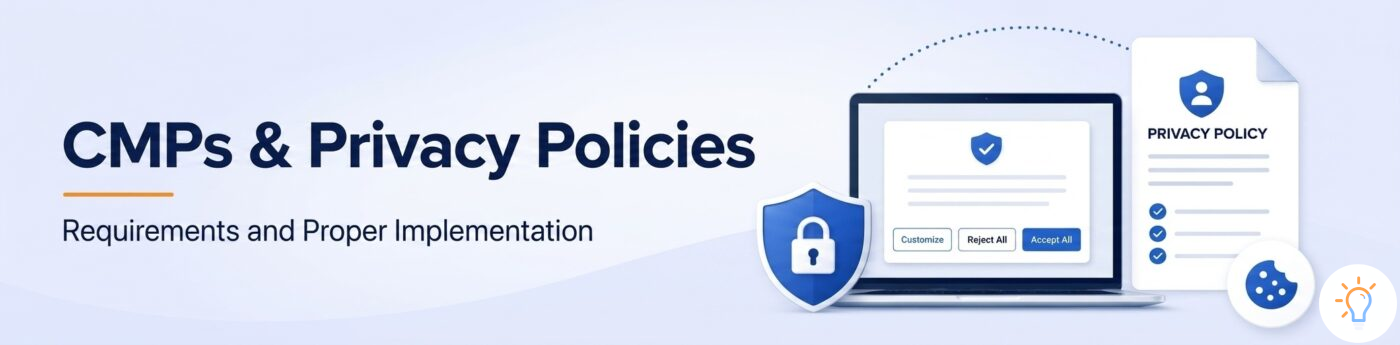
Privacy compliance is no longer just a legal checkbox—it directly impacts your ability to track performance, run effective ad campaigns, and build trust with your audience. Understanding proper CMP (Consent Management Platform) implementation, cookie consent banner requirements, and broader privacy policy requirements is essential for any business operating online today.
With the continued shift away from third-party cookies, businesses are relying more heavily on first-party data—data collected directly from users through your website, forms, and interactions. The challenge is that this data must now be collected transparently and with proper consent, making CMP implementation a critical part of your digital marketing strategy.
This also highlights the importance of a privacy policy, which must clearly explain how user data is collected, used, and protected through proper privacy policy implementation. Together, CMPs and well-structured privacy policies address both compliance and performance. This ensures that you meet regulatory standards while still collecting the data needed to optimize campaigns.
Key Takeaways
- Privacy compliance now impacts marketing performance. Cookie banners and privacy policies are no longer just legal requirements—they directly affect tracking, attribution, reporting, and campaign optimization.
- First-party data is more important than ever. As third-party cookies continue to fade out, businesses need compliant ways to collect and use data directly from website visitors.
- A properly implemented CMP protects both compliance and data quality. The right setup helps manage consent, meet GDPR and US State Laws/CCPA requirements, and preserve valuable marketing insights.
- Location-based consent behavior matters. GDPR and U.S. state privacy laws work differently, so geotargeted banner behavior can help apply the correct experience based on the user’s location.
- Privacy policies should reflect your real data practices. A generic privacy policy template often falls short. Your policy should align with your website tools, tracking setup, and consent banner behavior.
- Ongoing maintenance is essential. Cookie scans, tag checks, uncategorized cookie reviews, and policy updates are all important as websites, tools, and privacy laws evolve.

CookieYes banner from https://aandmhardware.com website
Consent Management Platforms (CMPs): Proper Implementation
What Is a Consent Management Platform?
A consent management platform (CMP) is a tool that allows your website to:
- Collect and store user consent for cookies and tracking
- Control when scripts (like Google Ads or Analytics) are allowed to fire
- Give users the ability to opt in, opt out, or modify preferences
Why CMPs Matter
As third-party cookies have continued to disappear, first-party data has become the foundation of effective digital marketing.
A properly implemented CMP allows you to:
- Collect consented first-party data in a compliant way
- Maintain usable tracking for key ad platforms like Google Ads, Microsoft Ads, Meta, and LinkedIn
- Preserve attribution and conversion tracking
- Avoid major gaps in reporting
Without proper implementation, you risk either losing critical data or collecting it in a way that doesn’t meet GDPR or US state laws regulations (including CCPA compliance requirements).
Basic vs. Advanced Google Consent Mode
Basic Consent Mode
- Blocks all non-essential tracking until consent is granted
- No data collected prior to consent
- Most restrictive and results in significant data loss
Advanced Consent Mode
- Allows limited, privacy-safe tracking before consent
- Sends cookieless pings to Google
- Enables modeled conversions and better attribution
- Preserves campaign performance while remaining compliant
Because it reduces reporting gaps and improves conversion modeling, we typically recommend Advanced Consent Mode for clients running paid advertising.
GDPR vs. U.S. State Law Behavior
GDPR (EEA/UK)
- Default: Only essential tracking is permitted until the user opts in
- Requires explicit consent before cookies fire
U.S. State Laws
- Default: Generally, tracking is permitted until the user opts out (requirements vary by state and data use)
- May require a “Do Not Sell or Share My Personal Information” option (CCPA/CPRA and others)
Advanced plans for cookie banner implementation allow for geotargeting. This way, the correct consent behavior can automatically be applied based on the user’s location.
Our CMP Implementation Approach
At Sharp Innovations, CMP implementation is not a one-time setup: It’s a strategic system designed to balance compliance with marketing performance.
Auditing Your Data Collection & Marketing Stack
We begin by auditing your website and marketing to understand how data is collected. This includes anything from analytics tools and advertising platforms to forms and user interactions. Doing so ensures that your CMP aligns with your first-party data strategy, rather than limiting it unnecessarily.
Configuring CMPs Through Google Tag Manager
From there, we implement your CMP (typically CookieYes or Cookiebot) through Google Tag Manager, allowing precise control over script behavior. Our configuration includes Google Consent Mode as well as the integration of Microsoft UET consent signals and Microsoft Clarity Consent API. That way, tracking respects user preferences from the start.
Preserving Attribution & Supporting Data Modeling
A key part of our approach is preserving attribution. We pass ad click identifiers like GCLID and MSCLKID through URLs, allowing conversion tracking to remain intact even when cookies are restricted.
In combination with Advanced Consent Mode, this also supports data modeling within advertising platforms. When full user-level tracking isn’t available due to consent choices, platforms like Google can use consented signals and cookieless data to model conversions and fill in gaps. This helps to maintain more accurate reporting and campaign optimization.
We can also implement ads data redaction where stricter compliance is required and customize how long scripts wait before firing while awaiting user consent.
Building a Compliant and User-Friendly Experience
On the front end, we build a compliant and user-friendly experience by adding required elements like a “Do Not Sell or Share” link, customizing banner messaging and styling, and segmenting behavior by region to display the appropriate banner (GDPR vs. U.S. laws, down to the state level if needed/depending on the plan level).
Ongoing Monitoring, Maintenance, and Reporting
One of the advantages of choosing Sharp Innovations as your consent management agency is that we don’t stop after launch. We regularly run cookie scans, categorize new or uncategorized cookies, verify that scripts are firing correctly, confirm scans complete successfully, and ensure your configuration still aligns with current privacy laws. We also provide reporting so you have visibility into your compliance status.
The result is a CMP setup that not only meets legal requirements, but also protects the integrity of your marketing data.

First party data collection has become critical for effective advertising and reporting.
CMP FAQs
What is a cookie banner?
A cookie banner is a notification displayed on a website that allows users to accept, reject, or manage their cookie tracking preferences.
Do I need a cookie banner on my website? Isn’t a cookie notice enough?
A cookie notice may be sufficient for low-risk websites that only use essential cookies and limited tracking. However, websites using analytics, advertising, and/or remarketing, or serving users in stricter jurisdictions, often need a fully functional cookie banner and CMP with user controls.
What is the difference between Basic and Advanced Consent Mode?
Basic Consent Mode blocks all tracking until consent is given, while Advanced Consent Mode allows limited, cookieless data collection before consent to preserve analytics and ad performance.
What is first-party data and why is it important?
First-party data is information collected directly from users through your website. Direct data collection is essential for tracking and marketing. It is especially important because third-party cookies are being phased out.
Privacy Policies: Importance & Proper Implementation
Why Is a Privacy Policy Important?
The importance of a privacy policy goes beyond compliance—it directly supports your marketing strategy and builds trust with users.
A strong privacy policy:
- Explains how first-party data is collected and used
- Discloses tracking and advertising practices
- Defines user rights under GDPR and U.S. laws
- Aligns with your CMP and actual website behavior
- Helps meet requirements for transparency and compliance
If you’re looking for assistance from a digital marketing agency skilled in privacy policy best practices, you’ve come to the right place. At Sharp Innovations, we regularly help clients with privacy policy updates to ensure that their policies accurately reflect how their websites operate.
Do I Need a Privacy Policy on My Website?
While there is no single U.S. law requiring every website to have a privacy policy, many state privacy laws, platform requirements, and common data collection practices make one necessary for most businesses. If your website uses contact forms, analytics tools, advertising platforms, cookies, or ecommerce features, a privacy policy is typically required or strongly recommended.
How Sharp Innovations Implements Privacy Policies (The Right Way)
A privacy policy should never be a generic template—it should cover your actual data practices.
When we help a client update their privacy policy, we start by auditing how their website collects data – including forms, analytics tools, advertising platforms, and third-party integrations. This ensures that the policy accurately addresses the organization’s first-party data collection practices.
We then structure the policy to meet GDPR and US State Laws (including CCPA) privacy policy requirements -- clearly outlining what data is collected, how it is used, how it is shared, and what rights users have.
For CMP-enabled websites, we align the policy directly with the site’s consent platform. This includes explaining how users can manage consent, how tracking behaves before and after consent, and how advertising technologies are used. For websites without a CMP, we adjust the privacy policy to remove consent-specific language while still maintaining compliance.
We also ensure that the policy fully discloses other tracking practices like Google Ads remarketing, Microsoft UET, Microsoft Clarity, and Meta and LinkedIn advertising.
Finally, we continue to support clients with ongoing updates as tools, laws, and data practices evolve.
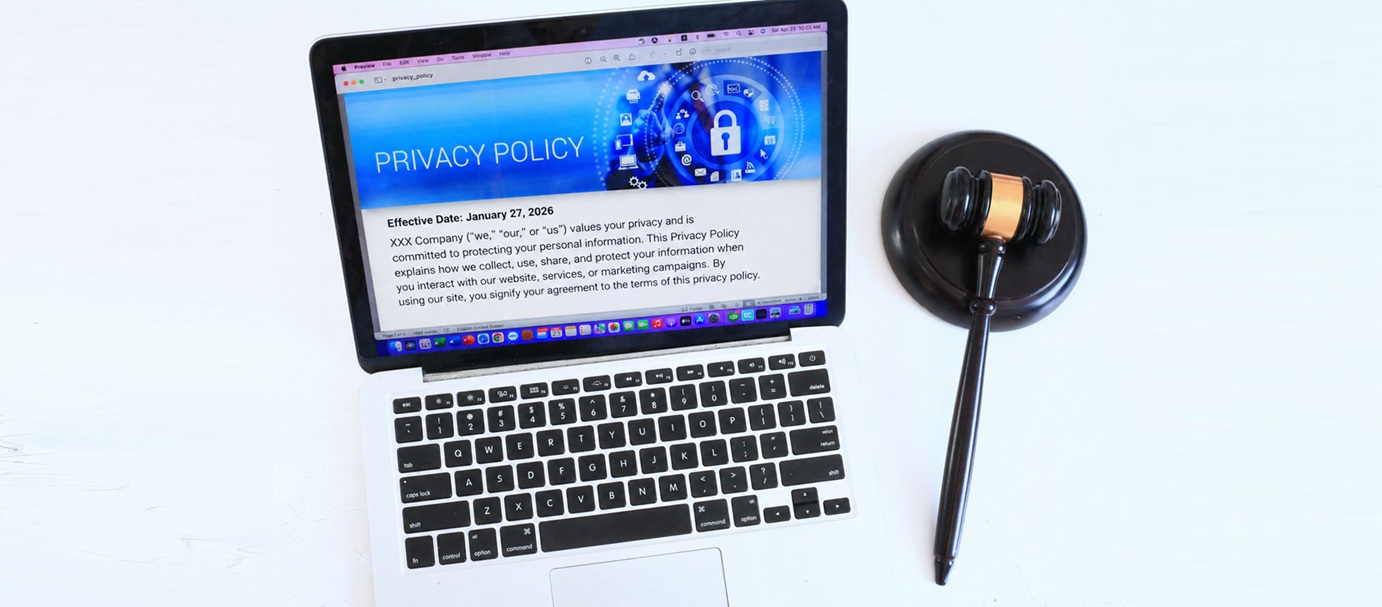
A comprehensive privacy policy is key to both complying and building trust amidst increasing privacy regulations.
Privacy Policy FAQs
What is a privacy policy?
A privacy policy (or privacy notice) is a document that explains how a business collects, uses, shares, and protects personal data.
Why is a privacy policy important?
A privacy policy is important because it ensures legal compliance, builds trust with users, and clearly explains how personal data is handled.
What are GDPR privacy policy compliance requirements?
GDPR ‘s privacy policy requirements focus on providing personal data access and transparency in terms of data usage. They also emphasize allowing users to access, update, or delete their personal data.
What are CCPA privacy policy requirements?
CCPA requires businesses to disclose what personal data is collected and how it is used. It also provides users with the ability to opt out of the sale or sharing of personal data.
How often should a privacy policy be updated?
A privacy policy should be updated at least once per year or whenever your data collection practices or applicable laws change. Some regulations like the CCPA/CPRA require annual reviews and updates.
Work With a Team That Understands Both Compliance and Marketing
CMPs and privacy policies are not just about compliance: They directly impact your ability to track, optimize, and grow.
At Sharp Innovations, we’ve helped many clients implement CMPs and develop comprehensive, compliant privacy policies tailored to their actual data practices. As a result, marketing data remains accurate, usable, and effective.
We specialize in:
- Expert CMP implementation
- CookieYes and Cookiebot agency support
- Consent configuration for ad platforms
- First-party data strategy and tracking preservation
- Privacy policy development and updates
- Ongoing compliance monitoring and reporting
Ready to see how you can outrank competitors with Google AI ads?
Schedule a free consultation with our team to improve visibility across AI Overviews, AI Mode, and today’s rapidly evolving search landscape.
Categories: Privacy, Paid Ad Services, Ppc, Digital Marketing | Authored by: Anita Taide | Posted: 05/04/2026