What to Expect When You Are Expecting…a New Website6 min read
February 9, 2026You’ve made the wise decision to build a new website or redesign an existing one. Congratulations! This is an exciting milestone and an important investment in your organization’s future.
Whether your goal is to refresh your brand, improve functionality, increase visibility, or better serve your audience, a new website is a powerful tool for growth. Much like welcoming a new addition, this process requires preparation, communication, and patience.
One of the most common questions clients ask after committing to a website project with Sharp Innovations is, “What happens next?”
Great question. Understanding the steps involved can help reduce uncertainty and set realistic expectations for the journey ahead. Below, we outline key phases, best practices, and helpful tips to guide you from the early planning stages through launch, and beyond.
Laying the Groundwork
Before diving into design and development, it’s important to start with a strong foundation. A successful website project depends on preparation, collaboration, and trust.
Ask questions early and often. No question is too small or insignificant. If you’re unfamiliar with web terminology or processes, that’s completely normal. The team members at web design agency you hire are there to guide you and translate technical concepts into clear, actionable information. Asking questions helps ensure alignment and prevents misunderstandings later in the process.
Trust the experts. You likely hired a web development team because of their experience and expertise, and to avoid any costly web development mistakes that could occur if you tried to build your site on your own. Trust their recommendations, workflows, and timelines. While your input is essential, allowing professionals to do what they do best will result in a stronger, more effective website.
Gather your materials. Before the project begins, collect any existing materials related to your organization. This may include brochures, flyers, business cards, presentations, photography, videos, logos, brand guidelines, or previous marketing content. These resources provide valuable insight into your messaging and visual identity and help streamline the content and design process.
Start With Your Brand
Branding is one of the most critical components of a successful website. Your brand extends far beyond a logo. It represents your organization’s personality, values, and voice. A strong brand includes consistent use of colors, fonts, imagery, tone, and messaging.
Gather all existing brand assets, such as logo files (in various formats), brand color codes, font files, and any style guides you may have. If these materials do not yet exist or are outdated, your web design or graphics team should be able to help you develop or refine them.
Below is an example of a page from a style guide we created for our client, Gettysburg Battlefield Tours. This page of the guide highlights proper and improper logo usage examples.
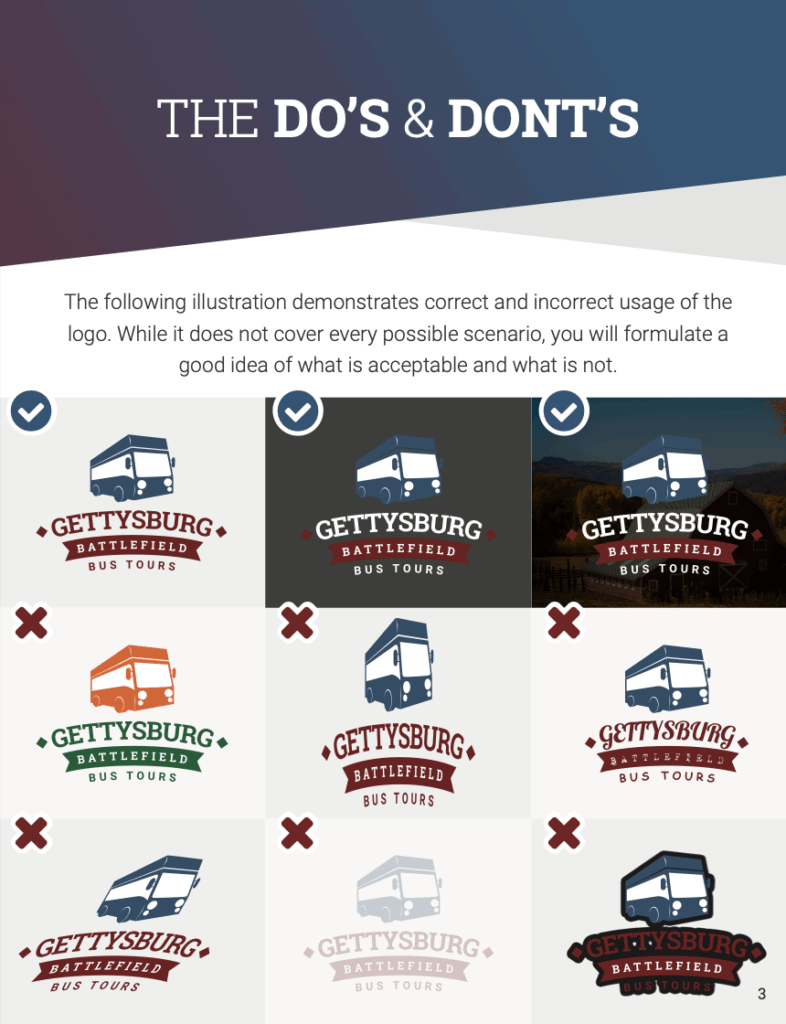
A cohesive brand creates trust and recognition. When your website aligns visually and emotionally with your storefront, vehicles, signage, social media, and advertising, it reinforces credibility and professionalism. Visitors should immediately recognize who you are and what you stand for, no matter where they encounter your brand.
Think About Your Sitemap
A sitemap is essentially a blueprint for your website. It outlines the structure of your site and shows how pages relate to one another. Sitemaps can be simple lists or more complex visual diagrams, depending on the size and complexity of your site.
Creating a sitemap early helps everyone stay organized and focused. It allows you to prioritize key pages and avoid unnecessary clutter. Think of it like organizing a filing cabinet: major categories go at the top, with related subpages neatly grouped beneath them.
A basic sitemap might look like this:
- Home
- About Us
- Services
- Category 1
- Category 2
- Category 3
- FAQs
- Contact Us
Not every website needs dozens of pages. Often, simpler structures provide a better user experience. Your development team can help you determine what is essential and what may be unnecessary.
Establish a Realistic Timeline
Timelines play a crucial role in any website project. While your development team will handle much of the technical work, your involvement is still required at key stages. This includes reviewing designs, providing feedback, approving content, and testing functionality.
Before the project begins, consider your availability. Identify times when you or someone on your team can dedicate attention to the project. If possible, avoid launching during your busiest season. Delegating a primary point of contact can help keep communication clear and the project moving forward.
In most cases, a standard website project takes approximately 30 to 60 days to complete. This timeframe allows for design, content creation, development, quality assurance, and revisions. Rushing the process can lead to errors or missed opportunities, so it is important to allow sufficient time for each phase.
Learn to Delegate
Delegation is often one of the most challenging aspects of a website project. While it is natural to want oversight, especially when the site represents your organization, it is neither efficient nor necessary to manage every detail yourself.
Identify team members who understand your mission, values, and goals, and empower them to take ownership of specific tasks. Whether it is content review, image selection, or approvals, distributing responsibility helps prevent bottlenecks and burnout.
Trusting your internal team and external partners creates a smoother, faster process and often leads to better results.
Preparing for New Website Launch
As the project nears completion, it is common to feel hesitant about launching. Many organizations worry that something is missing or that the site could be improved further. While perfection is a tempting goal, it is rarely achievable—and often unnecessary.
A website does not need to include every possible feature or page at launch. What matters is that it is functional, accurate, polished, and free of broken links or placeholder content. Additional enhancements can always be added over time.
Launching your website allows you to start reaping the benefits immediately, including improved visibility, credibility, and user engagement. Trust your development team’s guidance and remember that websites are living tools that evolve alongside your organization.
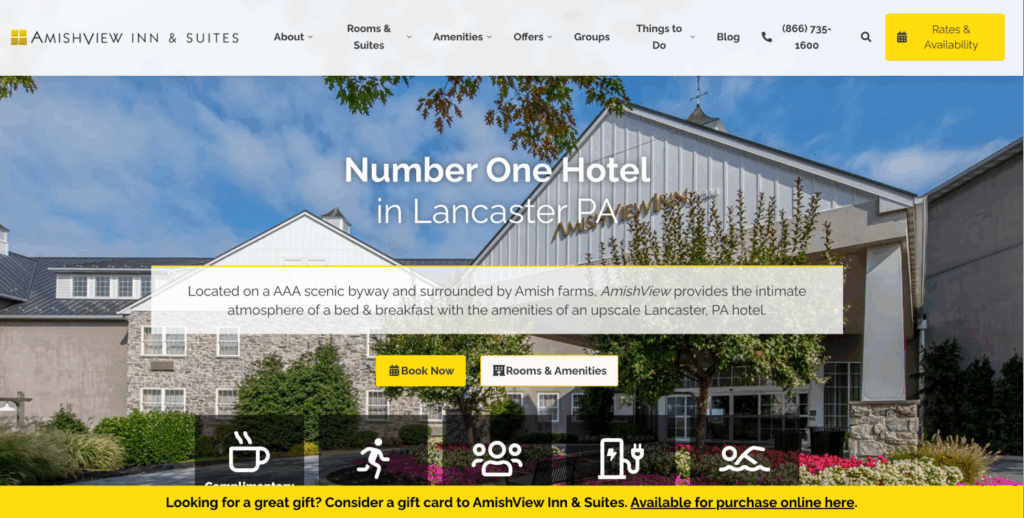
Related Reading: AmishView Inn & Suites Website Redesign Project
A Website Is a Beginning, Not an Endpoint
Building a new website is an exciting and meaningful step forward. It is a chance to tell your story more clearly, connect with your audience more effectively, and position your organization for long-term success. While the process requires planning, collaboration, and trust, the results are well worth the effort.
By preparing your materials, clarifying your brand, organizing your content, setting realistic timelines, and embracing delegation, you set the stage for a smooth and successful project. And when the time comes, do not be afraid to launch. Your website does not need to be perfect—it simply needs to be ready.
Remember, a website is not a one-time project; it is a foundation you can build upon. With the right team and mindset, your new site will grow with your organization and continue delivering value well into the future.
Is your brand’s website in need of an upgrade? The Sharp Innovations design team is standing by to help. Contact us today for a Free Consultation.

Tom Egizio joined Sharp in 2022 with over 23 years of experience developing websites, specializing in design, usability, and accessibility, focusing on user experience. With an emphasis on customer service and innovation, Tom strives to improve and expand his skills with a fascination for new technology and design styles.