

We’re entering the most transformative digital marketing era yet. If your head isn’t already spinning, just wait. So many changes, and even a shift back to a core old school philosophy. The next era will be defined not just by AI, but by human connection.
After years of rapid innovation like AI breakthroughs, shifts in consumer behavior, a cookie-less internet, and new discovery platforms, 2026 represents a true turning point. It’s the first year where AI-powered marketing stops being “new,” and starts becoming the default.
If you’re still in the “AI is stealing our jobs” or “anyone using AI is bad” mindset, it’s time to change or find a new career.
But, while the obvious trend in 2026 will be how AI continues to reshape the digital marketing landscape, the biggest trend isn’t automation, algorithms, or technology.
It’s humanity.
Consumers are telling brands, loud and clear, “Show us who you are. Talk to us. Let us talk back.”
AI may generate content at scale, personalize customer journeys, and optimize campaigns faster than teams ever could, but brands that win in 2026 will be those that stay grounded in authentic storytelling, transparent practices, and community-driven engagement.
Ready to journey into the new face of digital? You’re in the right place. Let’s take a look. Here are five digital marketing trends we see in 2026.
1. AI-First Workflows, Human-First Creativity
If 2025 was the year AI became mainstream, 2026 is the year AI becomes the foundation of modern marketing. Everything from SEO to copywriting to analytics to ad targeting is now built on AI-assisted workflows.
But something else is happening at the same time. Something amazing that I love to see. Something marketing has been missing for years.
Audiences are gravitating toward brands that feel human, imperfect, present, conversational, and real.
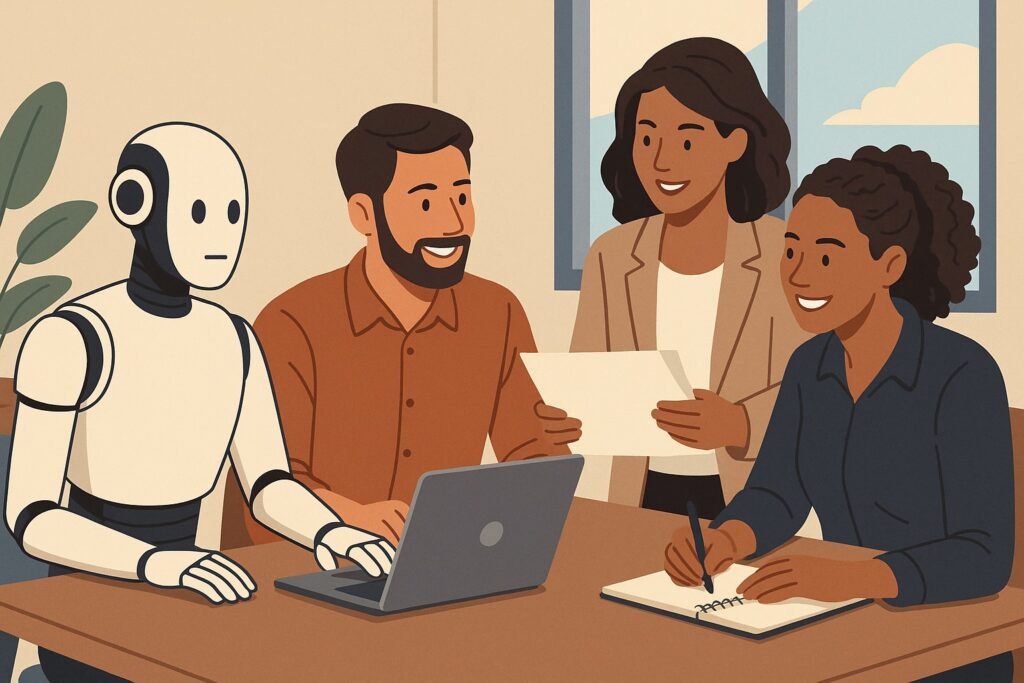
This creates a new mandate. Use AI to speed up production. Use humans to elevate meaning, nuance, and authenticity.

Why this matters in 2026
- Generative engines and chat-based search experiences mean content must be more authoritative and genuinely helpful.
- AI helps marketers automate, scale, and analyze, but humans add the empathy and insight modern audiences reward.
- Trust becomes a currency. With AI saturation at an all-time high, audiences judge content not only on quality, but on intent.
How brands will adapt
It will be up to you to determine how you walk the line between technology and humanity in 2026 and beyond. Smart marketers (like you) will increasingly rely on AI for things like:
- First-draft creation
- Predictive analytics and forecasting
- Audience segmentation
- Dynamic personalization
- Automated reporting and optimization
But they will rely on humans for:
- Brand voice
- Values-based storytelling
- Emotional resonance
- Ethical decision-making
- Relationship-building
That’s right. We are back, people!
This shift leads naturally into the next trend, because when AI becomes the engine behind digital marketing and “being human” come back in style, search itself begins evolving into something much bigger.
2. Search Everywhere & the Rise of Generative Engine Optimization (GEO)
Search is no longer defined by “Google and keywords.” In 2026, search is everywhere. It’s embedded in apps, voice assistants, AI chat interfaces, smart home devices, cars, social media, and workplace tools.
This means search is becoming a conversation, not a query.
And that changes everything about how brands must show up.
What “Search Everywhere” means
Consumers now discover brands through:
- AI-generated summaries
- Chat-based search experiences
- Voice-activated tools
- Recommendation engines
- Social platform micro-search
- Marketplace and app search
Smart device searches - And yes, still traditional search (Google still grabbed around 90% of market share as of late 2025)
Because discovery is now distributed across dozens of touchpoints, marketers can no longer rely solely on keyword targeting or SERP performance.
Generative Engine Optimization (GEO) becomes essential
GEO focuses on optimizing for AI-generated answers and summaries, not just web pages.
This requires:
- Highly authoritative, deeply structured content
- Clear claims backed by data, facts, and E-E-A-T principles
- Content designed for meaning, not just phrasing
- A strong brand reputation across platforms
As discovery shifts, the next major trend follows naturally. Brands must create content that works everywhere, and that means rethinking how content is produced, packaged, and delivered.
3. Immersive, Omnichannel Content Ecosystems Replace Single-Format Strategies
The era of “just blog more” or “post more on social” is over.
In 2026, content must be format-fluid and platform-native, meaning it adapts naturally to every environment your audience occupies.
The question is no longer,
“What format should we create?”
but
“How can we turn one insight into many experiences?”
Experience will be the life-blood of your content strategy. Create an immersive experience that grabs the audience and then keeps them.
That may mean you need to rethink the types of content you publish and the platforms on which you publish your content to optimize content for both humans and bots.
Why this trend is accelerating
- Attention spans are shrinking, but content consumption is exploding.
- Audiences want interactive, participatory experiences.
- Video (especially short-form) continues to dominate social and discovery platforms.
- AI makes it incredibly easy to repurpose and adapt content across formats.
The new content ecosystem includes:
Before detailing the formats, it’s important to highlight why these categories matter. Simple. We just can’t seem to stay in one place.
Modern users toggle between screens, devices, and contexts constantly. A buyer may see your video on TikTok, compare notes on Google, read a summary generated by an AI assistant, and then visit your site, all before taking a single step toward conversion.
You don’t need to do each one, but these content types help brands stay present at every touchpoint throughout their digital marketing. The key is to understand your audience, be where they expect you to be, and deliver the type of content they love.
- Long-form thought leadership (blogs, whitepapers, guides)
- Short-form video (TikTok, Reels, Shorts)
- Live video (Q&A sessions, product demos, community events)
- Interactive formats (quizzes, calculators, assessments)
- Conversational content (chatbots, AI-assisted guides)
- Voice-first content (podcasts, instructional audio, voice SEO)
- Micro-content (snippets, quotes, polls, carousels)
This shift toward richer, more human, more participatory content naturally raises an important question.
In a world driven by algorithms, how do brands maintain trust?
That’s where the next trend comes in.
4. Trust, Transparency & Human-First Storytelling in an AI-Saturated World
2026 may be the most trust-sensitive year in marketing history. Security breaches, deceptive advertising, and campaign blunders (to name a few) have raised eyebrows. As a result, consumers have lost trust in the brands they buy from.
Trust has become the most important currency for your brand. Brands that get this and take action to build trust are the ones that will rise up in 2026 and beyond.
As generative content floods the internet, audiences increasingly question:
- Who created this?
- Why should I trust it?
- Is this real?
- Is this brand actually behind this message, or is it automated fluff?
And because AI can generate content at unprecedented scale, consumers are developing sharper filters, gravitating toward brands that feel grounded, honest, and transparent.
The pillars of trust-first marketing in 2026
Brands must demonstrate:
- Transparent data practices
Consumers want to know how their data is collected, used, and stored, and they respond positively when brands communicate openly.
- Clear human authorship
Even if AI contributes to content, audiences want to feel that real people are behind the message.
- Radical relevance
Not generic personalization, but meaningful, helpful, contextual guidance.
- Values-driven storytelling
Purpose-led marketing isn’t performative anymore, it’s expected.
- Proof of expertise
Authority signals matter more in an AI-saturated content landscape. Case studies, credentials, original research, and human-voiced insights help brands’ digital marketing stand out.
This rising emphasis on trust and authenticity leads to the fifth, and arguably most important , trend shaping 2026.
5. Community, Conversation & Co-Creation: Brands Become More Human
The most important marketing shift in 2026 is simple.
Brands must behave like people, not companies.
Consumers, especially Gen Z and Gen Alpha, expect brands to participate in conversations, respond in real time, showcase personality, and be part of the cultural dialogue.
They don’t want brands who preach from a distance.
They want brands who participate.
The hallmarks of community-driven marketing in 2026
The following list helps describe the exact elements that define this trend. Each represents a shift from one-way communication to two-way dialogue. Make sure you know your audience, and you talk to them…not at them.
- User-generated content (UGC) as a central content strategy
- Customer co-creation inviting audiences to shape products, content, and experiences
- Micro-influencers who bring relatability and authenticity
- Branded communities (Slack, Discord, private groups)
- Live, unscripted engagement (streams, AMAs, behind-the-scenes)
- Human-to-human communication, even when aided by AI
This return to human connection completes the arc of all the preceding trends:
AI helps us scale; humans help us connect.
What Marketers Should Do Now: A 2026 Implementation Roadmap
To tie all five trends together, here is a practical, step-by-step action plan that you, as a digital marketing leader, can start implementing today.
1. Blend AI Into Every Workflow (But Add Human QA to Every Output)
Ever heard the term “human in the loop”? With AI integrating into seemingly every business action today, it’s more important than ever to ensure you have real, human team members with eyes on everything you do.
AI is a great tool to help you be more productive and efficient, but it is not without its risks. So, to ensure everything runs smoothly and you reap the benefits and avoid the pitfalls, here are some tips to help you work AI into your flow and systems the right way.
Do this:
- Adopt AI tools for writing, SEO, analytics, social scheduling, and research.
Use AI for first drafts, and create human-edited, brand-quality finals. - Train teams on prompt writing and guidance systems.
Build internal “AI guardrails” to preserve brand consistency.
Avoid this:
- Publishing fully automated content without human review.
- Sacrificing creativity in the name of volume.
- Mixing AI outputs with no clear human authorship.
2. Optimize for Generative Search & “Search Everywhere”
There’s a lot of talk (and confusion) online about how AI will impact search results. People are genuinely scared, excited, nervous, and curious, wrapped up in a big digital burrito.
To help clear up a few things about AI and search, here are some things you should do to get it right (and some things you should avoid).
Do this:
- Create content with depth, clarity, authority, and structure.
- Build pages that answer questions comprehensively.
- Develop clusters of semantically related content.
- Add concise summaries and structured data where helpful.
Avoid this:
- Keyword-stuffing or outdated SEO tactics (you should have stopped doing this 15 years ago…but just in case).
- Treating SEO as a channel instead of a holistic ecosystem.
Recommended Reading: Driving Innovation and Business Growth: Insights from the Lancaster Chamber Small Business Summit
3. Build Omnichannel Content Engines, Not Isolated Posts
You don’t have to be everywhere, but you can’t just be in one place. Your audience is made up of a diverse set of people with different preferences for how they communicate with your brand. Be sure to meet them where they live, work, and play.
Do this:
- Turn every big idea into 10–15 pieces of content across formats.
- Build templates for repurposing long-form content into micro-content.
- Use AI to scale adaptation while keeping creative oversight human.
Avoid this:
- Relying on one primary content type.
- Forgetting platform-native context (every channel has its own culture).
4. Prioritize Trust, Relevance & Transparency
Back to that human thing. Trust is hot right now. Transparency plays a major role in building that mission-critical trust. Here are a few ways to benefit from this (hopefully here-to-stay) trend.
Do this:
- Publish real case studies and expert insights.
- Explain your data practices clearly and simply.
- Use first-party data to improve personalization responsibly.
- Showcase real people (team members, creators, customers).
Avoid this:
- Using generic AI content without authority signals.
- Speaking in corporate jargon.
5. Build & Grow Communities, Not Audiences
In the recent past, brands have performed like rockstars on a stage. Shouting out messaging and waiting for the audience to return applause. That approach no longer works. Today, it’s about dialogue. One of the best ways to create dialogue is to build real, engaging communities around your brand.
Do this:
- Engage in real dialogue across social platforms.
- Elevate user stories over brand statements.
- Invest in community managers and creator partnerships.
Treat engagement as a relationship, not a metric.
Avoid this:
- One-way posting without interaction.
- Relying only on large influencers for reach.
The Bottom Line: 2026 Belongs to Brands Who Use AI to Become More Human
AI is not the end of human creativity. It is the amplifier of it.
It is not replacing marketers. It is empowering them.
It is not removing the need for authenticity. It is increasing.
In 2026, the brands that succeed will be those that:
- Scale smarter with AI
- Communicate with empathy
- Build communities, not just audiences
- Show their human side
- Deliver real value in every interaction
This year is not simply a technological evolution. It’s a much-needed human one. I’m all for it. We’ve lost touch with one another, and it’s time we bring back real, human connection. Who would have thought that robots would be the driver of this shift?
Marketing has always been about people.
2026 is simply bringing that truth into sharper (no pun intended) focus.


Anthony is Chief Marketing Officer (CMO) at Sharp Innovations. He is a two-time published author and award-winning marketing & brand strategist. He has helped brands both large and small grow and thrive across multiple industries through strategic marketing campaigns and leveraging a powerful network of influencers.