
The way people search online and how businesses show up isn’t just evolving, it’s being redefined by Generative Engine Optimization.
For years, search engine optimization (SEO) success meant earning a top spot in Google’s results and competing for clicks. Fast forward to 2026, and that model no longer tells the full tale.
Generative AI systems like ChatGPT, Google Gemini, and Perplexity are now answering questions directly, summarizing complex topics, and guiding decisions without always sending users to a website at all.
This shift introduces a new layer of strategy that brands can’t afford to ignore. That strategy is Generative Engine Optimization (GEO). Yes…a new acronym, like we needed another, right?
GEO isn’t about abandoning SEO. SEO is still highly relevant and valuable if you want to grab a piece of that visibility pie.
Instead, GEO is about recognizing that discoverability now happens inside AI-generated answers, not just on search results pages. Brands that adapt early will shape the narrative. Those that refuse to risk becoming invisible, even if their rankings look fine on paper.

What Is Generative Engine Optimization (GEO)?
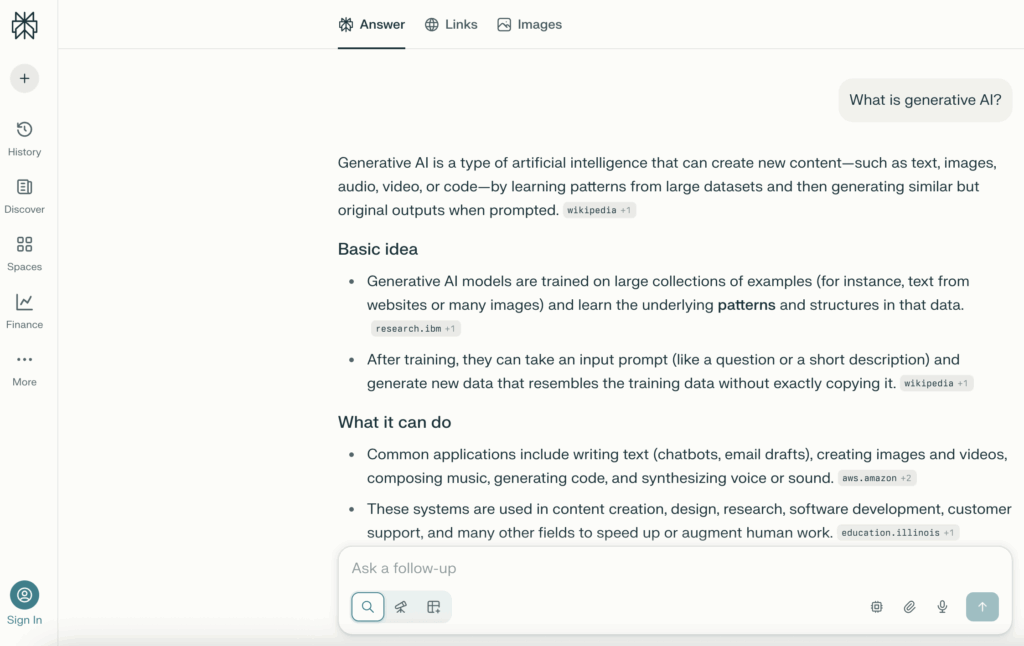
Generative Engine Optimization (GEO) is the practice of optimizing your content, data, and authority so that AI-driven search systems can understand, trust, and reference your brand when generating answers.
Instead of focusing solely on ranking for keywords, GEO shifts the goal to being selected as a source. When an AI system responds to a question, it doesn’t simply pull the highest-ranking page. It synthesizes information from sources it believes are accurate, authoritative, and clearly explained.
To execute GEO properly, you need to ask different questions than traditional SEO.
Questions like:
- Does our content clearly explain what we do?
- Is our expertise obvious to both humans and machines?
- Are our insights consistent and verifiable across the web?
- Do we offer clear and specific answers to the right questions?
When users ask AI tools questions like “How can businesses reduce operational costs?” or “What’s the smartest way to improve local search visibility?”, GEO determines whether your brand is part of that answer, or left out entirely.
So, plan for the questions you know your audience is asking, and clearly address those in your content.
Related Article: The Future of Digital Marketing: Five Trends to Watch in 2026
Why Traditional SEO Alone Isn’t Enough Anymore
SEO still plays a critical role in helping your site show up when it counts. But relying on traditional SEO alone assumes users will always click through to websites before making decisions. That assumption no longer holds.
Generative AI often resolves intent before a click ever happens. Users get summaries, comparisons, and recommendations instantly. In many cases, the journey ends right there. Or at least the search part of the equation ends. Once the user has their answer, if you showed up in that answer, you’re the likely next step on their journey.
Traditional SEO was built to optimize pages for ranking signals like keywords, links, and metadata to earn clicks so you can then sell the user via the content on your website. Generative engines, on the other hand, evaluate content based on meaning, clarity, and credibility. They don’t reward volume. They reward understanding.
This creates a gap. A page can rank well in search but still be ignored by AI if it lacks structure, depth, or authority. GEO exists to close that gap, ensuring your content is not only findable, but usable by AI systems. It’s your teams about working with AI and not against it.
How Generative AI Engines Actually Choose Sources
To optimize for generative engines, it helps to understand how they assemble answers in the first place.
Unlike traditional search engines that rank pages, generative systems analyze information across many sources simultaneously. They look for patterns, consistency, and signals of expertise. Content is compared, cross-referenced, and distilled into a response that feels confident and complete.
AI engines tend to favor sources that:
- Explain topics clearly and concisely
- Use consistent terminology and definitions
- Demonstrate subject-matter expertise over time
- Are supported by corroborating information elsewhere online
- Provide structured signals that clarify context
In practice, this means a single blog post isn’t enough. Brands that show up repeatedly with content like in-depth guides, FAQs, service pages, and educational content, become easier for AI to trust. GEO rewards depth and continuity, not one-off optimization.
GEO vs. SEO: Where the Focus Shifts
At this point, the difference between SEO and GEO becomes clearer. They’re aligned, but they prioritize different outcomes. You need to focus on both to succeed, so, let’s compare and look at a simple break down of where they separate.
Traditional SEO focuses on:
- Ranking pages for specific keywords
- Optimizing individual URLs
- Driving clicks and sessions
- Matching search intent
- Measuring success through traffic and rankings
Generative Engine Optimization focuses on:
- Being selected as a trusted source
- Establishing brand-level understanding
- Influencing answers and summaries
- Matching answer intent
- Measuring success through visibility, citations, and influence
SEO asks, “Will someone find and click this?”
GEO asks, “Will an AI trust this enough to repeat it?”
Both questions matter. But they shape content very differently. So, as you build out your content strategy, you will want to focus on ensuring you get a “yes” when you answer both of the above questions.
Why GEO Matters for Brands in 2026
The impact of GEO isn’t theoretical, it’s already happening. If you’re struggling to understand it, you’re not alone. There’s plenty of chatter online about the shift, including lots of frustrated SEO professionals trying to figure it all out.
AI Overviews and conversational search experiences are reducing organic click-through rates. Users are starting research with AI tools instead of browsers. Buying decisions are influenced by summaries that feel authoritative, even when users don’t know where the information originated.
In this environment, brands that aren’t referenced effectively lose mindshare, not just traffic. Even if you rank well, you may be absent from the conversation that shapes perception and choice.
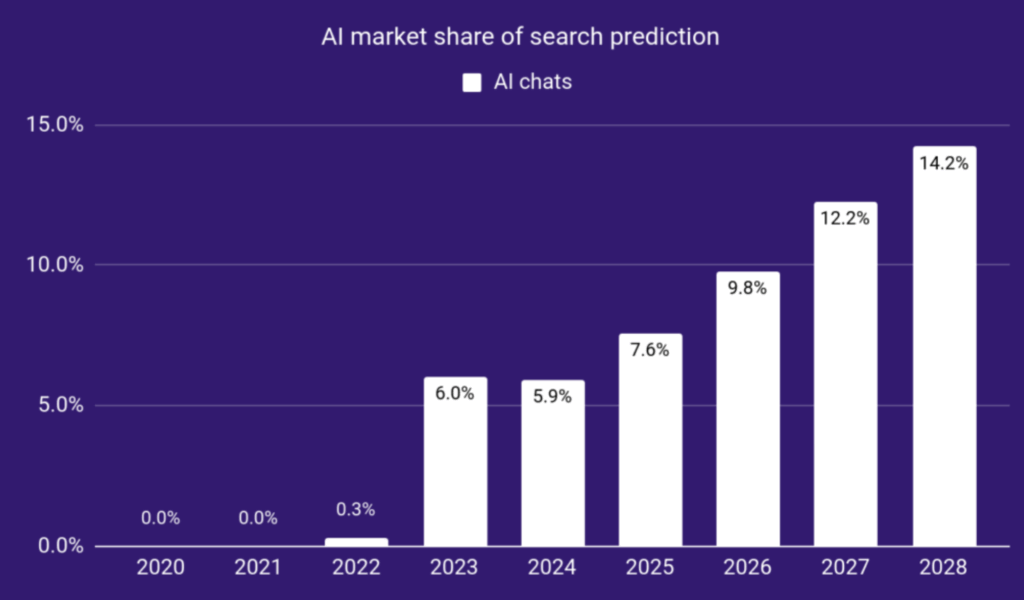
In 2026, visibility isn’t just about showing up. It’s about being part of the explanation, and part of the conversation. Studies show that the market share for AI search will continue to grow over the next several years, so don’t sleep on it. Get active in the GEO space now.

Actionable GEO Strategies You Can Start Using Now
The good news is that GEO doesn’t require a complete overhaul of your content strategy and your website. It requires being more intentional with what you’re already doing. You’re likely already doing a lot of things right. You just need to make a few adjustments.
Start by shifting how you think about content creation. Write to explain, not just to attract. Focus on clarity, completeness, and consistency.
Some practical ways to incorporate GEO into your strategy:
- Structure content around real questions and direct answers
- Build clusters of related content that reinforce expertise
- Use schema markup to clarify meaning and relationships
- Reinforce your positioning across your website and external mentions
- Clearly define your brand, services, locations, and audience
The goal is to make it easy for AI systems to understand exactly who you are, what you know, and why you’re credible.
Recommended Article: The New Age of Social Media Marketing: Benefits, Platforms, and Strategic Considerations
Common GEO Mistakes to Avoid
As GEO gains attention, shortcuts will be tempting and costly. As with most shortcuts (or hacks, if you will), you need to be careful.
Mass-producing generic AI-written content, publishing thin pages, or chasing trends without substance weakens trust signals. Generative engines are designed to filter noise, not amplify it.
The biggest mistake brands can make is treating GEO as a trick instead of a discipline. AI rewards clarity, accuracy, and real-world experience. Anything less becomes invisible over time. Approach GEO with the same care and discipline you have approached SEO over the years.
Related Article:
The Bottom Line: GEO Is About Earning Trust at Scale
Generative Engine Optimization isn’t about gaming AI. It’s about earning relevance in a world where machines summarize reality for people.
The brands that win in 2026 will:
- Use AI to accelerate, not replace, expertise
- Publish fewer, better pieces of content
- Prioritize accuracy, structure, and proof
- Think beyond clicks and rankings toward influence
SEO helped users find websites.
GEO helps AI systems find credible answers.
And when machines increasingly speak on your behalf, being trusted by them becomes one of the most important advantages a brand can have.


Anthony is Chief Marketing Officer (CMO) at Sharp Innovations. He is a two-time published author and award-winning marketing & brand strategist. He has helped brands both large and small grow and thrive across multiple industries through strategic marketing campaigns and leveraging a powerful network of influencers.